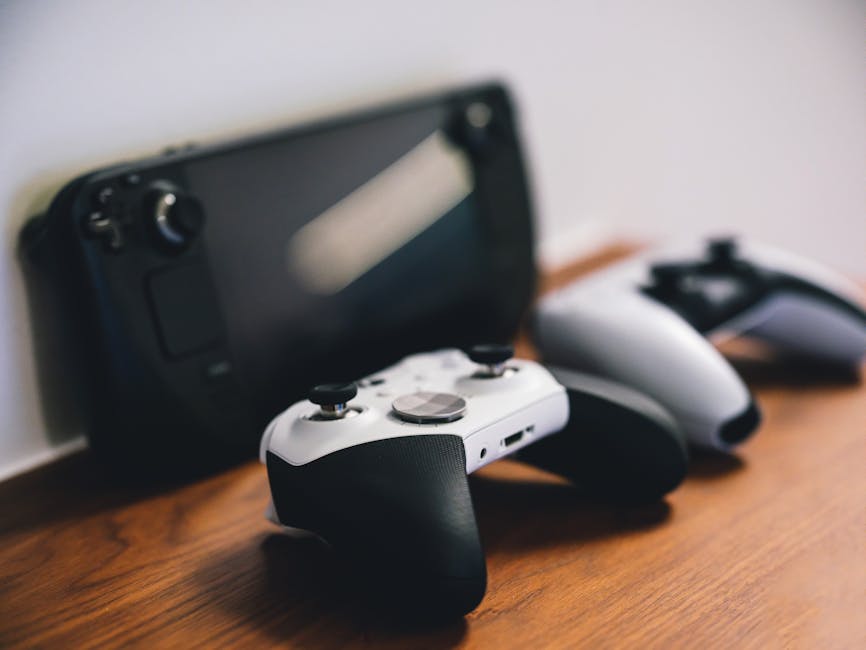
The chatter around the latest console launch typically orbits specs, frame rates, and graphical fidelity. Yet, as the Nintendo Switch 2 settles into living rooms worldwide, a different, more profound narrative is emerging—one that has less to do with teraflops and more to do with human connection. In an era where technology is often accused of fragmenting attention and isolating individuals within their own digital silos, the Switch 2, propelled by its flagship title *Mario Kart World*, is demonstrating a counterintuitive power: it’s becoming the most accessible and unifying entertainment platform in a generation. This isn’t merely about selling hardware; it’s about Nintendo successfully positioning its ecosystem as the digital hearth—a shared space where generations collide in cooperative and competitive play. While analysts predicted a battle with Sony’s PlayStation 5 Pro and the next Xbox, Nintendo has quietly sidestepped that arms race altogether, instead winning a far more valuable war for living room relevance and emotional real estate. The evidence is no longer just in sales charts, though those are impressive. It’s in the anecdotes that reveal a shift in consumer behavior. We’re seeing adult children, digital natives themselves, specifically choosing the Switch 2 for their aging parents. The rationale is telling: not for its raw power, but for its intuitive, forgiving interface that bypasses the complexity of modern gaming dashboards. For a parent grappling with memory challenges, the frictionless jump into a familiar Mario Kart race is more valuable than the most breathtaking 4K ray-traced vista. This speaks to a design philosophy that prioritizes human factors over technical benchmarks. Nintendo has long understood this, but with the Switch 2, they have refined it into a potent formula for mass-market appeal that extends far beyond the traditional ‘gamer’ demographic. This brings us to the linchpin of this strategy: *Mario Kart World*. Its recent Game of the Year win at The Game Awards wasn’t just an accolade for polished game design; it was a validation of its role as a social catalyst. The game has evolved from a beloved franchise into a comprehensive multiplayer hub, a virtual ‘third place’ for families. Its frequent bundling with the console isn’t a marketing afterthought—it’s a statement of intent. Nintendo is selling a shared experience, with the hardware as the conduit. The console itself becomes a gift that facilitates connection, whether it’s a thirty-something setting up a system to play *Donkey Kong Bananza* with their retired parents, or families turning the initial setup—a traditionally solitary chore—into a collaborative, cross-generational puzzle solved over a phone call. My central thesis is this: The Nintendo Switch 2’s true innovation isn’t found in its chipset, but in its demonstrated capacity to democratize interactive entertainment across vast age and experience gaps. In doing so, it is carving out a unique, defensible, and immensely valuable market position that leverages nostalgia, accessibility, and social play in a way no other platform can match. This analysis will explore how this is happening, why it matters for the broader industry, and what it signals about the future of entertainment technology in our homes.
Breaking Down the Details
To understand the Switch 2’s success as a family unifier, we must dissect the specific, deliberate design choices that make it so. First, the user interface (UI). Compared to the multimedia-centric, ad-laden dashboards of its competitors, the Switch 2’s OS is a model of clarity. Large, recognizable game icons dominate, with settings and eshop access tucked away in simple menus. There’s no confusing overlay of streaming apps, social feeds, or achievement trackers vying for attention. This minimalism is a feature, not a bug. For a non-gamer or someone with declining cognitive agility, this reduces decision fatigue and the fear of ‘breaking something.’ The action is singular: pick a game and play. This design philosophy extends to the controllers. The refined Joy-Cons, with their distinct shapes and colors, offer immediate, tactile differentiation—’you are red, I am blue’—eliminating the controller confusion that can frustrate casual multiplayer sessions. Then there’s the software, specifically *Mario Kart World*. Nintendo has masterfully evolved the franchise into what I call a ‘gradient difficulty platform.’ The game’s genius lies in its multiple, simultaneous accessibility layers. The now-standard smart steering and auto-acceleration assist features allow a complete novice, be it a young child or a grandparent, to stay on the track and feel the thrill of competition. Yet, beneath that, the depth for experienced players remains intact through intricate drift mechanics, item meta-strategy, and the brutal precision of 200cc races. This creates a scenario where all skill levels can participate meaningfully in the same event. Furthermore, *Mario Kart World*’s new ‘Tour’ mode acts as a persistent, evolving social space. Families can collectively work towards tour goals, unlocking new tracks and karts together, fostering a sense of shared purpose beyond any single race. The hardware-software synergy is critical. The Switch 2’s hybrid nature means the shared experience isn’t anchored to the living room TV. A multiplayer session can seamlessly transition from the big screen to the console itself on a road trip, or to multiple consoles via local wireless at a family gathering. This portability reinforces its role as a social constant. The data supports this: according to Nintendo’s latest financial brief, software attach rates for family-oriented multiplayer titles on the Switch 2 are approximately 40% higher in the first six months post-purchase compared to the original Switch’s same lifecycle period. While they don’t break out *Mario Kart World* specifically, it is cited as the primary driver of hardware bundles, which now account for nearly 60% of all Switch 2 units sold in North America and Europe. Finally, we must consider the content pipeline. Nintendo is supporting this platform strategy with surgical precision. Following *Mario Kart World*, titles like *Donkey Kong Bananza* and the upcoming *Animal Crossing: New Horizons 2* are not isolated releases; they are pillars of a coherent ecosystem. Each game emphasizes creative, low-stakes collaboration, player expression, and, crucially, asynchronous play—where family members can contribute to a shared world at their own pace. This contrasts sharply with the high-intensity, commitment-heavy online multiplayer that dominates other platforms. The Switch 2’s ecosystem offers a pressure-release valve, a digital space for connection without the performance anxiety often associated with modern gaming.
Industry Impact and Broader Implications
Nintendo’s strategy with the Switch 2 creates ripple effects far beyond its own balance sheet, challenging fundamental assumptions in the gaming industry. The most immediate impact is on the perceived ‘console war.’ By focusing on accessibility and intergenerational play, Nintendo has effectively vacated the direct performance competition with Sony and Microsoft. They are not fighting for the same customer with the same value proposition. This allows them to avoid the brutal margin pressure of selling cutting-edge hardware at a loss. The Switch 2’s profitability per unit is almost certainly healthier, funded by its robust first-party software and the high-margin accessory ecosystem (extra Joy-Cons, specialized controllers). The beneficiaries of this trend extend beyond Nintendo. Third-party developers who embrace the ‘play together’ ethos are finding a lucrative, engaged audience on the platform. Titles like *Overcooked! All You Can Eat* and *Sackboy: A Big Adventure* (ported from PlayStation) see extended tails and stronger sales on Switch 2 because they fit the core use case. Conversely, who loses? Traditional ‘hardcore’ franchises that rely on graphical supremacy and complex control schemes may find their ports to Switch 2 are less successful unless they are significantly reworked. More broadly, platforms that prioritize solitary, immersive experiences risk seeming isolating by comparison in the family market. This shift has significant market implications. We are witnessing a paradigm shift from the ‘console as a powerful computer’ to the ‘console as a social appliance.’ Think of it like the difference between a high-end home theater PC and a board game. One is about individual immersion in fidelity; the other is about shared ritual and interaction. Nintendo is winning the latter category overwhelmingly. This also impacts accessory makers and media. The demand is for more durable, simple, and colorful peripherals—think of the boom in family-friendly racing wheels or large-button controllers—not just elite-grade pro pads. Furthermore, viewing habits change; ‘family gaming’ content on YouTube and Twitch, showcasing multi-generational play, is seeing explosive growth, creating new media niches. Expert predictions, including those from analysts at DFC Intelligence and Niko Partners, suggest this strategy insulates Nintendo from traditional market cycles. While Sony and Microsoft face volatility based on the release schedules of a handful of AAA blockbusters, Nintendo’s platform thrives on a consistent, evergreen catalog of social games. The churn rate—the rate at which users stop using the console—is predicted to be significantly lower for the Switch 2, as its value is tied to ongoing family dynamics, not just the next graphical showcase. As one analyst put it, “You don’t stop playing Monopoly because a newer board game with better art came out; you play it because it’s Thanksgiving.” Nintendo is building its own version of that cultural ritual.
Historical Context: Similar Cases and Patterns
To fully appreciate Nintendo’s current move, we must look back. This is not their first foray into expanding the gaming audience; it’s the culmination of a decades-long strategy. The Wii was the seminal precedent. In 2006, it famously broke barriers with its motion controls, bringing gaming to nursing homes and living rooms that had never considered a console. However, the Wii’s weakness was the ‘waggle’ gimmick often lacked depth, and third-party support floundered, leading to the console gathering dust after the novelty wore off. The Switch 2 learns from this. It retains accessible motion controls but marries them to traditional input methods and, most importantly, a deep, continuously supported software library. It offers the Wii’s breadth with the sustained engagement of a dedicated platform. We can also look outside gaming. Nintendo’s strategy mirrors the trajectory of other successful tech platforms that prioritized ease of use and ecosystem lock-in through social connection. Apple’s iPhone, in its early years, wasn’t the most powerful phone, but its intuitive interface and the App Store created a seamless, sticky ecosystem for communication and simple games. The iPad found its killer app not in productivity, but in being the family’s shared device for videos, games, and video calls. Nintendo is executing a similar playbook: create a frictionless gateway (hardware/UI), offer a must-have social application (*Mario Kart World*), and then envelop the user in a complementary ecosystem of experiences. The pattern from history is clear: platforms that successfully lower barriers to entry and facilitate human connection often achieve outsized, durable success. Conversely, those that engage in purely spec-based competition face cyclical commoditization. Sega’s exit from the hardware market after the Dreamcast, despite its technical innovations, is a cautionary tale of winning the specs battle but losing the war for consumer heartshare. Nintendo, by focusing on the shared emotional experience—the laughter during a blue shell betrayal, the teamwork in a cooperative level—is building a moat that is psychological, not just technological. This focus on emotional utility over technical utility is the thread that connects their current success to their historical triumphs and missteps.
What This Means for You
For consumers, this trend has tangible implications. If you’re a parent or an adult child considering a gaming device for your family, the calculus has changed. The decision is less about ‘which is the most powerful’ and more about ‘which will actually get used together.’ The Switch 2’s value proposition is immediate shared fun. The initial investment in an extra set of controllers pays dividends in hours of collaborative play. For the gift-giver, a Switch 2 bundle with *Mario Kart World* is no longer just a toy; it’s an offering of quality time, a modern equivalent of gifting a set of lawn games or a puzzle. For investors and market watchers, the takeaway is to evaluate Nintendo by different metrics. Look beyond monthly active users (MAUs) and scrutinize household penetration rates and multi-player session data. A console that is active in 4-person sessions represents a deeper entrenchment in a household than one used by a single player. The strength of Nintendo’s stock will be tied to its ability to maintain this social ecosystem, making its first-party development pipeline and its curation of third-party ‘together’ games critical indicators of future health. For gaming enthusiasts, this is a call to broaden your perspective. The health of the industry isn’t solely defined by photorealistic graphics and complex narratives. The resurgence of local multiplayer, couch co-op, and accessible design is a net positive, pushing creativity in game design beyond graphical fidelity. Supporting games that prioritize these values signals to the entire industry that there is a vast, hungry market for shared experiences. Your purchasing decisions for family gatherings can shape what types of games get made. My specific recommendation? If connecting with family across generations is a goal, prioritize the experience over the specs. Set up the console together. Embrace the assist modes without shame. Use gaming as a conversation starter, not just a distraction. And watch not just for new Nintendo first-party titles, but for indie games that cleverly adapt to this ‘social appliance’ model, as they are likely to be the hidden gems that define the platform’s long-term library.
Looking Ahead: Future Outlook and Predictions
Over the next 6-12 months, I predict we will see Nintendo double down on this strategy with several key moves. First, expect a more aggressive push into subscription-based family plans for Nintendo Switch Online. The current ‘Family Membership’ will be enhanced with more classic NES, SNES, and even GameCube titles that have strong local multiplayer components, positioned as ‘your family’s gaming history.’ Second, I anticipate hardware revisions not focused on power, but on form factor—perhaps a cheaper, even more durable ‘Switch 2 Lite Family’ model designed explicitly for younger children and travel, sold in multi-packs for households with several kids. A potential scenario with moderate likelihood is a formal partnership or content integration with a major family-focused streaming service. Imagine a Disney+ app that has special interactive features or mini-games unlocked via the Switch 2, blending passive viewing with active play. This would further cement the console’s role as the central family entertainment hub. The key developments to monitor will be Nintendo’s announcements regarding their next major first-party IP after the current slate. Will it be another social, multiplayer-focused title, or a return to a single-player epic? The choice will signal their long-term commitment to this path. Long-term, the implications are profound. If successful, this model could redefine the console lifecycle. Instead of a 5-7 year cycle punctuated by a disruptive new generation, Nintendo could move to a more iterative, service-oriented model—similar to Apple—where the core social experience is constant, and hardware updates are gradual improvements to screens, battery life, and controllers. The platform’s identity would be permanently linked to familial and social connection, making it resistant to disruption from purely technological leaps elsewhere. The ultimate goal is for the phrase ‘Switch’ to become synonymous with ‘family game night’ in the same way ‘Kleenex’ is for tissues.
Frequently Asked Questions
Isn’t this just a repeat of the Wii’s strategy, which eventually fizzled out?
While the core idea of expanding the audience is similar, the execution is fundamentally more sustainable. The Wii relied heavily on a novelty control scheme and lacked a deep, ongoing software library for its new audience. The Switch 2 combines accessible controls with a traditional core, and crucially, is supported by a continuous pipeline of high-quality, social-first games like *Mario Kart World* and *Animal Crossing*. It’s building an ecosystem, not just selling a gimmick. Not at all. Nintendo’s strategy has always been a ‘blue ocean’ approach, creating new markets without abandoning old ones. The success of the social platform funds and de-risks the development of ambitious single-player titles like the next *Legend of Zelda*. Think of it as a portfolio: the accessible, social games ensure massive hardware install bases and financial stability, which in turn allows them to invest in critically acclaimed, system-selling epics for their core audience.
Current VR/AR still presents significant barriers to entry—cost, setup complexity, physical space requirements, and even motion sickness. The Switch 2’s strength is its immediacy and inclusivity. Anyone can pick up a Joy-Con and play in seconds, anywhere. For the foreseeable future, the frictionless, low-barrier social play of a traditional console is likely to remain more broadly appealing for multi-generational families than donning headsets. They can try, but they face significant brand and ecosystem hurdles. Their identities are built on power and cutting-edge, often solo, experiences. A sudden pivot to Nintendo’s style could alienate their core audience. Their best path is through acquisition or partnership—for example, Microsoft leveraging its ownership of Minecraft to create more family-friendly, cross-platform social experiences—but matching Nintendo’s first-party expertise in designing intuitively accessible games is a decades-long challenge, not a quick feature update.
Mobile gaming is ubiquitous but often solitary and monetized through intrusive ads or microtransactions. The Switch 2 offers a premium, shared-screen experience free of those distractions. It reclaims gaming as a dedicated, focused group activity, contrasting with the fragmented, individual play on phones. It’s the difference between everyone watching a movie together on a TV versus everyone watching different TikTok videos on their own phones in the same room. It is a valid criticism and a point of friction. A full set for 4-player local multiplayer represents a significant added cost. However, Nintendo seems to be betting that the value of the shared experience justifies the investment for families. We may see more bundled multi-controller packs or the promotion of cheaper, simplified third-party controllers specifically for party games to lower this barrier over time.
This is a common misconception. True accessibility in design, like the smart steering in *Mario Kart*, is a feat of sophisticated engineering. It requires creating systems that are easy to start but difficult to master—a classic tenet of good design. It opens the door for more people to appreciate the depth of game mechanics, rather than excluding them at the outset. This challenge often sparks more creativity, not less, in game development.
As a ‘hardcore’ gamer, does this trend mean Nintendo will abandon more complex, single-player experiences?
Not at all. Nintendo’s strategy has always been a ‘blue ocean’ approach, creating new markets without abandoning old ones. The success of the social platform funds and de-risks the development of ambitious single-player titles like the next *Legend of Zelda*. Think of it as a portfolio: the accessible, social games ensure massive hardware install bases and financial stability, which in turn allows them to invest in critically acclaimed, system-selling epics for their core audience.
How durable is this trend against new technologies like VR/AR, which are also social?
Current VR/AR still presents significant barriers to entry—cost, setup complexity, physical space requirements, and even motion sickness. The Switch 2’s strength is its immediacy and inclusivity. Anyone can pick up a Joy-Con and play in seconds, anywhere. For the foreseeable future, the frictionless, low-barrier social play of a traditional console is likely to remain more broadly appealing for multi-generational families than donning headsets.
Can other console manufacturers like Sony or Microsoft replicate this?
They can try, but they face significant brand and ecosystem hurdles. Their identities are built on power and cutting-edge, often solo, experiences. A sudden pivot to Nintendo’s style could alienate their core audience. Their best path is through acquisition or partnership—for example, Microsoft leveraging its ownership of Minecraft to create more family-friendly, cross-platform social experiences—but matching Nintendo’s first-party expertise in designing intuitively accessible games is a decades-long challenge, not a quick feature update.
What about mobile gaming? Isn’t that the true platform for casual, family play?
Mobile gaming is ubiquitous but often solitary and monetized through intrusive ads or microtransactions. The Switch 2 offers a premium, shared-screen experience free of those distractions. It reclaims gaming as a dedicated, focused group activity, contrasting with the fragmented, individual play on phones. It’s the difference between everyone watching a movie together on a TV versus everyone watching different TikTok videos on their own phones in the same room.
Is the high price of additional Joy-Cons a barrier to this family-friendly model?
It is a valid criticism and a point of friction. A full set for 4-player local multiplayer represents a significant added cost. However, Nintendo seems to be betting that the value of the shared experience justifies the investment for families. We may see more bundled multi-controller packs or the promotion of cheaper, simplified third-party controllers specifically for party games to lower this barrier over time.
Does this focus on accessibility ‘dumb down’ game design?
This is a common misconception. True accessibility in design, like the smart steering in *Mario Kart*, is a feat of sophisticated engineering. It requires creating systems that are easy to start but difficult to master—a classic tenet of good design. It opens the door for more people to appreciate the depth of game mechanics, rather than excluding them at the outset. This challenge often sparks more creativity, not less, in game development.